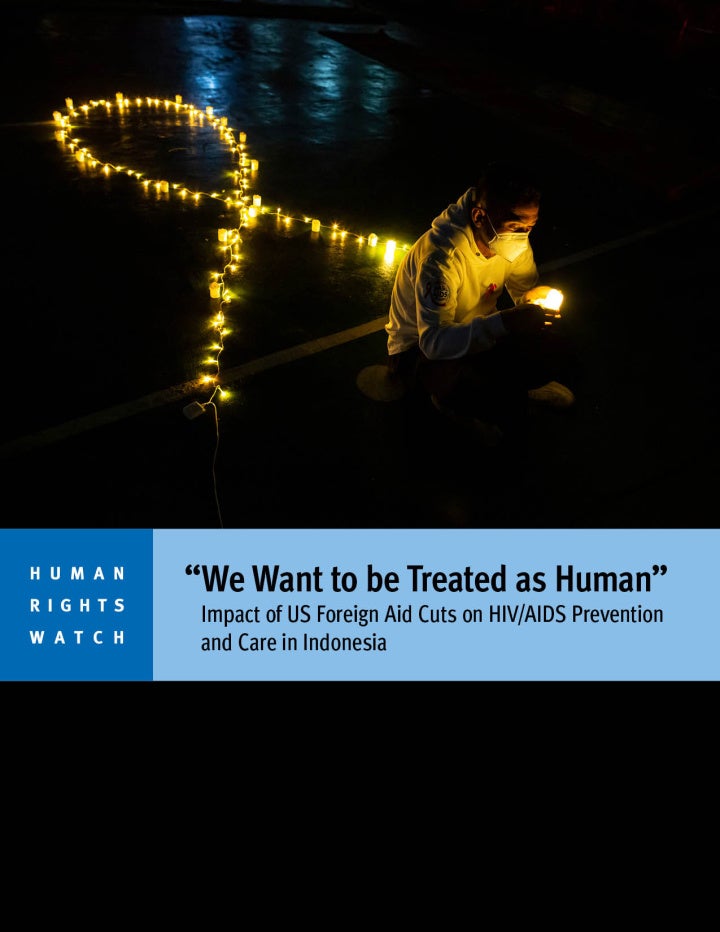
Impact of US Foreign Aid Cuts on HIV/AIDS Prevention and Care in Indonesia
The 33-page report, “‘We Want to Be Treated as Human’: Impact of US Foreign Aid Cuts on HIV/AIDS Prevention and Care in Indonesia,” documents the Trump administration’s dismantling of the US Agency for International Development (USAID) and finds that it eliminated services for people at greatest risk of HIV, creating additional barriers to testing, prevention, and lifesaving treatment. The Indonesian government and international donors should urgently restore support for community-led HIV/AIDS services.
Human Rights Abuses Affecting Migrants Living with HIV
This 22-page report describes how discrimination and human rights abuses faced by migrant populations result in increased vulnerability to HIV infection and barriers to care and treatment.
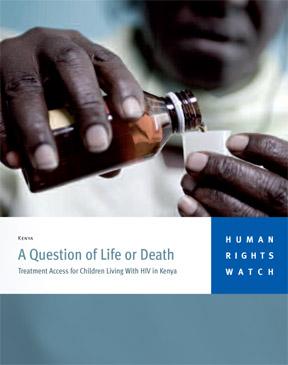
Treatment Access for Children Living With HIV in Kenya
In this 100-page report, Human Rights Watch documents how the government's HIV treatment program has failed to get lifesaving drugs to the majority of children who need them. If untreated, half of all children born with HIV will die before their second birthdays.
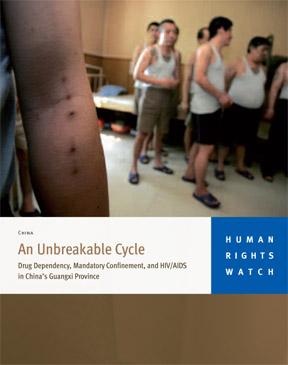
Drug Dependency Treatment, Mandatory Confinement, and HIV/AIDS in China’s Guangxi Province
In China, illicit drug use is an administrative offense and Chinese law dictates that drug users “must be rehabilitated.” In reality, police raids on drug users often drive them underground, away from methadone clinics, needle exchange sites, and other proven HIV prevention services.
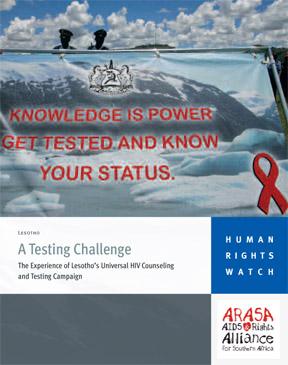
The Experience of Lesotho’s Universal HIV Counseling and Testing Campaign
This 60-page report found that the Know Your Status (KYS) campaign, begun in 2005 with the goal of testing 1.3 million people, was underfunded and had tested only 25,000 people by August 2007, four months before the campaign ended. Ambitious goals to train and pay thousands of lay counselors and expand support groups for people living with HIV were largely sidelined.
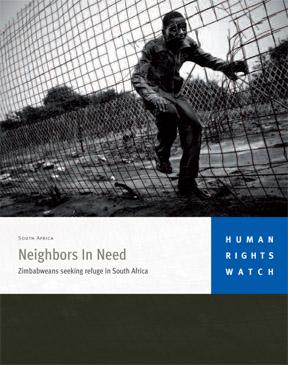
This 119-page report examines South Africa’s decision to treat Zimbabweans merely as voluntary economic migrants and its failure to respond effectively to stop the human rights abuses and economic deprivation in Zimbabwe that cause their flight and to address their needs in South Africa. Human Rights Watch spoke to almost 100 Zimbabweans in South Africa about their plight.
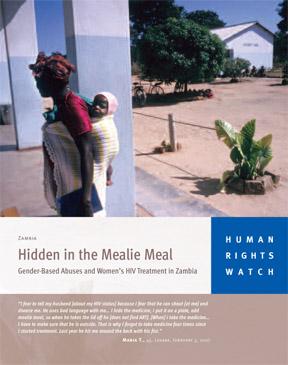
Gender-Based Abuses and Women’s HIV Treatment in Zambia
While acknowledging the significant overall progress made by the Zambian government in scaling up HIV treatment generally, this report documents how the government has fallen short of its international legal obligations to combat violence and discrimination against women.
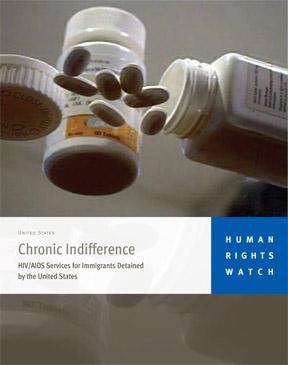
HIV/AIDS Services for Immigrants Detained by the United States
This 71-page report documents the experiences of HIV-positive detainees in immigration custody whose HIV treatment was denied, delayed, or interrupted, resulting in serious risk and often damage to their health.
Barriers to HIV/AIDS Treatment for People Who Use Drugs in Thailand
This 57-page report found that routine police harassment and arrest – as well as the lasting effects of former Prime Minister Thaksin Shinawatra’s 2003 drug war – keeps drug users from receiving lifesaving HIV information and services that Thailand has pledged to provide.
Russia’s Human Rights Obligation to Provide Evidence-based Drug Dependence Treatment
<table cellpadding="3" cellspacing="0"><tr><td><img src=" http://www.hrw.org/images/home/2007/100//russia17278.jpg" align="left" border="0" /></td> <td valign="top"> In this 110-page study, Human Rights Watch found that the treatment offered at state drug treatment clinics in Russia was so poor as to constitute a violation of the right to health.</td></tr></table>
The management of infectious disease in prisons is a human rights imperative as well as a matter of public health. Given the high level of HIV infections among those who enter prison, making condoms readily accessible to inmates is an effective and inexpensive measure that corrections officials should take to limit the spread of infection.
The 2006 U.N. High Level Meeting on HIV/AIDS and Its Failure to Address the Human Rights Abuses Fueling the Pandemic
In this report, Human Rights Watch examines how the declaration from the United Nations High Level Meeting on HIV/AIDS addresses such critical issues as women’s and children’s rights, abuses faced by socially marginalized populations, and access to treatment.
Romania’s Failure to Protect and Support Children and Youth Living with HIV
More than 7,200 Romanian children and youth aged 15 to 19 are living with HIV. The vast majority were infected with HIV between 1986 and 1991 as a direct result of government policies that exposed them to contaminated needles and “microtransfusions” in which small children were injected with unscreened blood in the mistaken belief that this would improve their immunological status.
Government Failures, Human Rights Abuses and Squandered Progress in the Fight against AIDS in Zimbabwe
This 72-page report documents how the abusive policies and practices of the Zimbabwean government are fueling the HIV/AIDS epidemic, increasing vulnerability to infection, and obstructing access to treatment.
Human Rights Abuses Impeding Ukraine’s Fight Against HIV/AIDS
This report documents how draconian drug laws and routine police abuse of injection drug users – the population hardest hit by HIV/AIDS in Ukraine – keep them from receiving lifesaving HIV information and services that the government has pledged to provide.
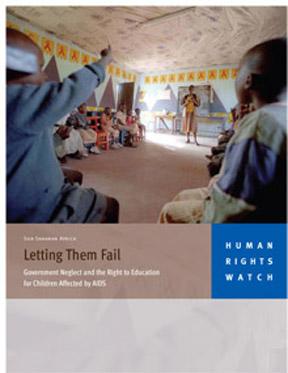
Government Neglect and the Right to Education for Children Affected by AIDS
This 55-page report is based on firsthand testimony from dozens of children in three countries hard-hit by HIV/AIDS: South Africa, Kenya, and Uganda. It documents how governments fail children affected by AIDS when they leave school or attempt to return.