Impact of US Foreign Aid Cuts on HIV/AIDS Prevention and Care in Indonesia
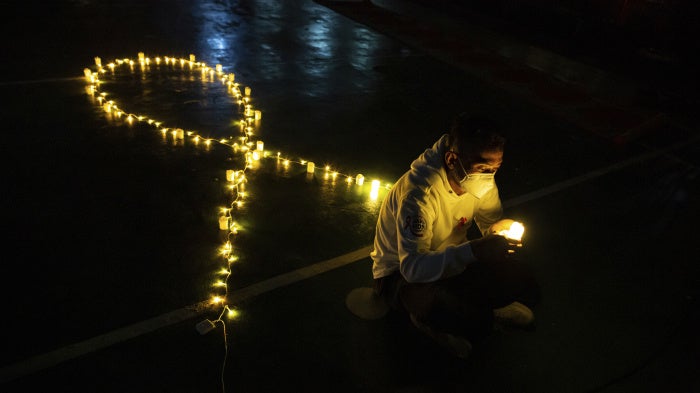
The 33-page report, “‘We Want to Be Treated as Human’: Impact of US Foreign Aid Cuts on HIV/AIDS Prevention and Care in Indonesia,” documents the Trump administration’s dismantling of the US Agency for International Development (USAID) and finds that it eliminated services for people at greatest risk of HIV, creating additional barriers to testing, prevention, and lifesaving treatment. The Indonesian government and international donors should urgently restore support for community-led HIV/AIDS services.
This report is the most detailed study to date of abuses by insurgent groups. It systematically presents and debunks the arguments that some insurgent groups and their supporters use to justify unlawful attacks on civilians.
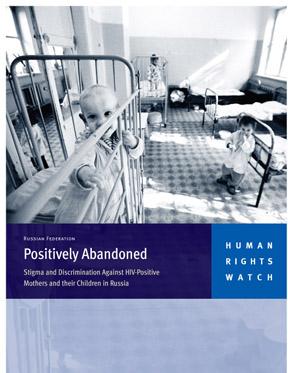
Stigma and Discrimination against HIV-Positive Mothers and their Children in Russia
As Russia’s HIV/AIDS epidemic spreads, thousands of HIV-positive mothers and their children face pervasive discrimination and abuse. This 41-page report focuses on the discrimination that these women face, as do their children, many of whom are abandoned to the care of the state.
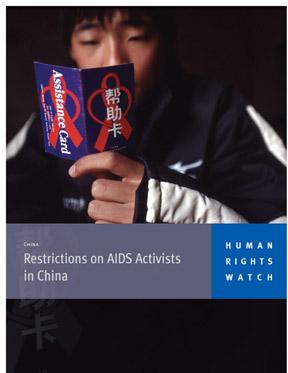
This 57-page report based on on-the-ground interviews with Chinese AIDS activists, gay rights activists, activists working with drug users, and website managers shows that while senior officials have said they want to encourage China's emerging civil society, many AIDS activists face state harassment and bureaucratic restrictions.
This 80-page report documents the recent removal of critical HIV/AIDS information from primary school curricula, including information about condoms, safer sex and the risks of HIV in marriage.
Governments around the world have done far too little to combat the entrenched, chronic abuses of women’s and girls’ human rights that put them at risk of HIV. Misguided HIV/AIDS programs and policies, such as those emphasizing abstinence until marriage, ignore the brutal realities many women and girls face.
HIV/AIDS is a preventable disease, yet approximately 5 million people were newly infected with HIV in 2003, the majority of them through sex. Many of these cases could have been avoided, but for state-imposed restrictions on proven and effective HIV prevention strategies, such as latex condoms.
Homophobia, Violence, and Jamaica’s HIV/AIDS Epidemic
Jamaica’s growing HIV/AIDS epidemic is unfolding in the context of widespread violence and discrimination against people living with and at high risk of HIV/AIDS, especially men who have sex with men. Myths about HIV/AIDS persist.
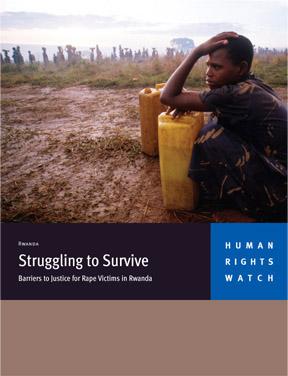
This 58-page report investigates the persistent weaknesses in the Rwandan legal system that hamper the investigation and prosecution of sexual violence. The report also documents the desperate health and economic situation of rape survivors. Many of the women who were raped became infected with HIV.
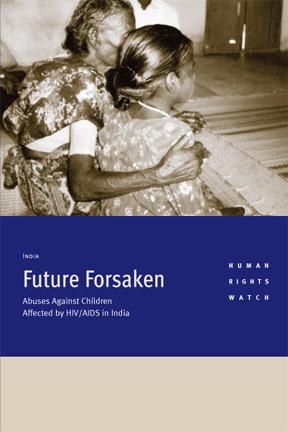
Abuses Against Children Affected by HIV/AIDS in India
This 209-page report documents how many doctors refuse to treat or even touch HIV-positive children. Some schools expel or segregate children because they or their parents are HIV-positive. Many orphanages and other residential institutions reject HIV-positive children or deny that they house them.
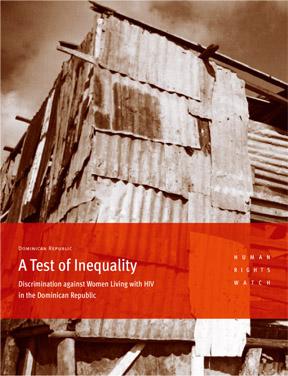
Discrimination against Women Living with HIV in the Dominican Republic
Women in the Dominican Republic are routinely subjected to involuntary HIV testing, and those who test positive are fired and denied adequate healthcare. This 50-page report documents the human rights violations women living with HIV suffer in the public health system as well as in the workplace.
Human Rights Watch has issued numerous reports showing that human rights abuses against persons living with and at high risk of HIV/AIDS contribute significantly to new HIV infections worldwide. This is true in Thailand, the host of this year’s AIDS conference, as well as in numerous other countries worldwide.
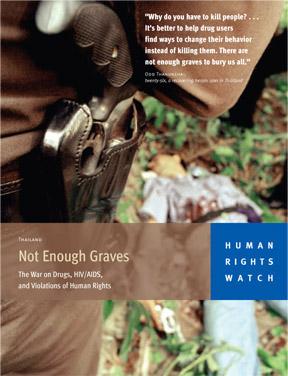
The War on Drugs, HIV/AIDS, and Violations of Human Rights
This 60-page report provides fresh evidence of extrajudicial killings, arbitrary arrests and other human rights violations by Thai authorities. The report contains first-hand testimony from relatives of people killed during the drug war, as well as drug users who endured beatings, forced confessions and arbitrary arrests at the hands of Royal Thai Police.
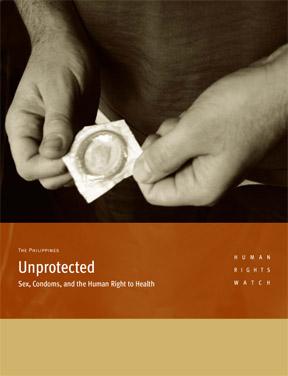
In this 70-page report, Human Rights Watch says that the Philippine government bans the use of national funds for condom supplies. Some local authorities, such as the mayor of Manila City, prohibit the distribution of condoms in government health facilities. School-based HIV/AIDS educators told Human Rights Watch that schools often prohibited them from discussing condoms with students.
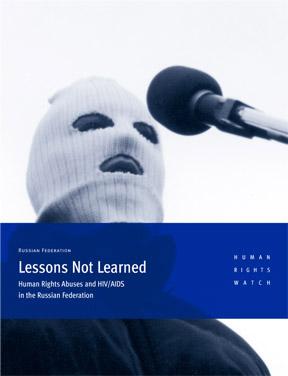
Human Rights Abuses and HIV/AIDS in the Russian Federation
This 62-page report documents how harsh drug policies and routine police harassment of injection drug users—the population hit hardest by AIDS in Russia—impedes their access or makes them afraid to seek basic HIV-prevention services such as syringe exchange, which is available in other countries around the world.