Reports

Solitary Confinement and Abuse of People with Disabilities in Prisons in the State of South Australia

The 50-page report, “‘They Just Locked Me Away’: Solitary Confinement and Abuse of People with Disabilities in Prisons in the State of South Australia,” documents the use of solitary confinement on people with psychosocial disabilities, mental health conditions. It details broader problems facing people with disabilities in South Australian prisons, including inadequate access to individualized mental health care and lack of prison oversight.
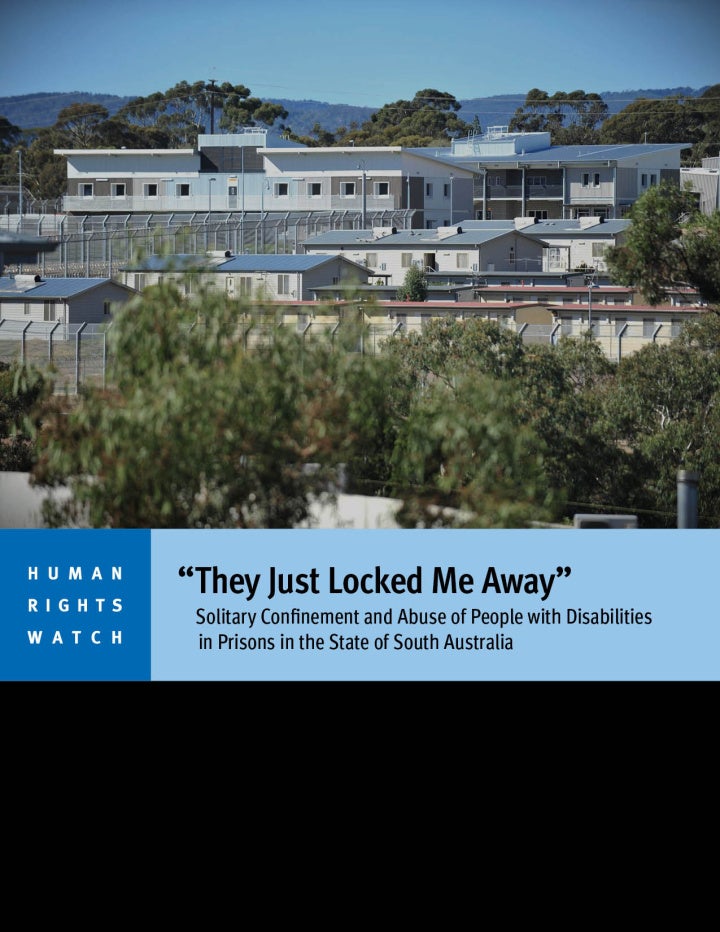
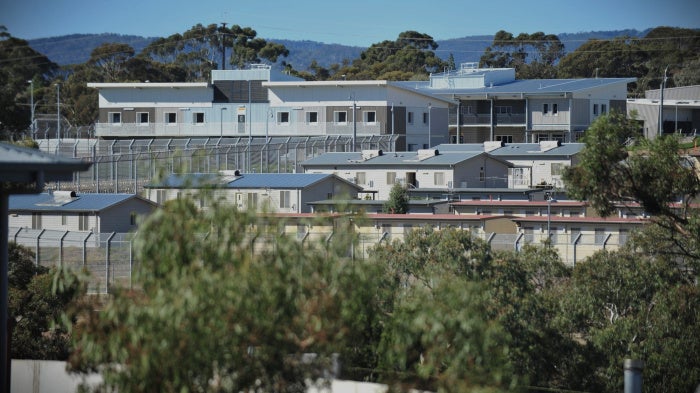
exterior of a prison
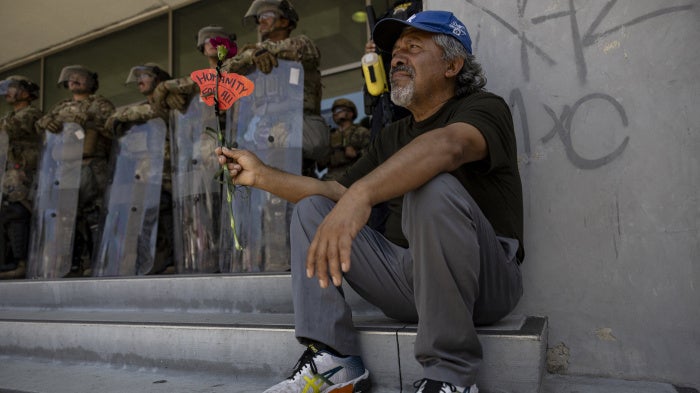
A man holds a flower and the message "Humanity for All" in front of a line of soldiers

Search

  • August 26, 2010

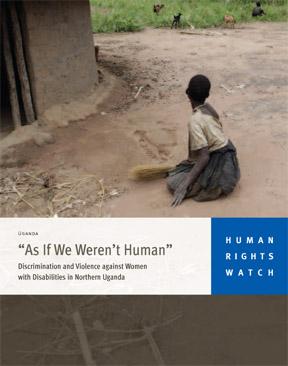
    Discrimination and Violence against Women with Disabilities in Northern Uganda

    This 73-page report describes frequent abuse and discrimination by strangers, neighbors, and even family members against women and girls with disabilities in the north. Women interviewed for the report said they were not able to get basic provisions such as food, clothing, and shelter in camps for displaced persons or in their own communities.
  • August 10, 2010

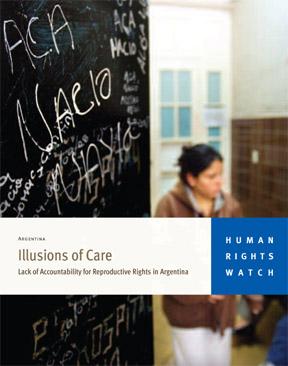
    Lack of Accountability for Reproductive Rights in Argentina

    This 52-page report documents the many obstacles women and girls face in getting the reproductive health care services to which they are entitled, such as contraception, voluntary sterilization procedures, and abortion after rape.

  • July 25, 2010

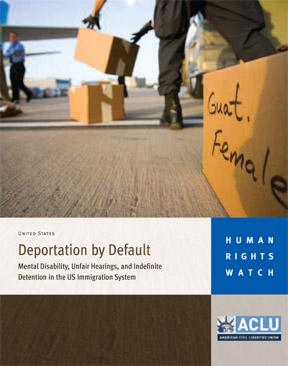
    Mental Disability, Unfair Hearings, and Indefinite Detention in the US Immigration System

    This 98-page report says that immigrants with mental disabilities are often unjustifiably detained for years on end, sometimes with no legal limits. The report documents case after case in which people with mental disabilities were prevented from making claims against deportation – including claims of US citizenship – because they were unable to represent themselves.
  • July 15, 2010

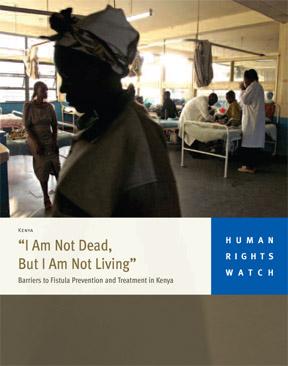
    Barriers to Fistula Prevention and Treatment in Kenya

    This 82-page report describes the devastating condition facing women with fistula in Kenya and the wide gap between government's policies to address reproductive health and the reality of women's daily lives.

  • August 10, 2009

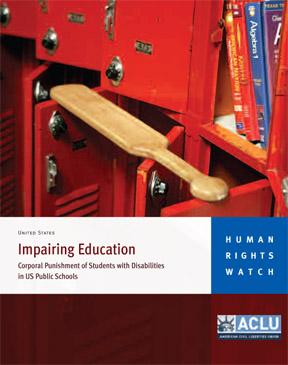
    Corporal Punishment of Students with Disabilities in US Public Schools

    In this 70-page report, the ACLU and Human Rights Watch found that students with disabilities made up 18.8 percent of students who suffered corporal punishment at school during the 2006-2007 school year, although they constituted just 13.7 percent of the total nationwide student population.
  • August 19, 2008

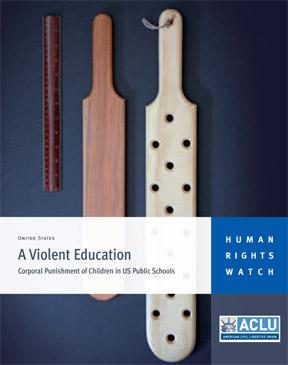
    Corporal Punishment of Children in US Public Schools

    In this 125-page report, the ACLU and Human Rights Watch found that in Texas and Mississippi children ranging in age from 3 to 19 years old are routinely physically punished for minor infractions such as chewing gum, talking back to a teacher, or violating the dress code, as well as for more serious transgressions such as fighting. Corporal punishment, legal in 21 states, typically takes the form of “paddling,” during which an administrator or teacher hits a child repeatedly on the buttocks with a long wooden board. The report shows that, as a result of paddling, many children are left injured, degraded, and disengaged from school.

  • June 9, 2008

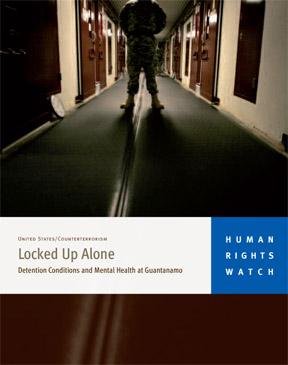
    Detention Conditions and Mental Health at Guantanamo

    This 54-page report documents the conditions in the various “camps” at the detention center, in which approximately 185 of the 270 detainees are housed in facilities akin to “supermax” prisons even though they have not yet been convicted of a crime.

  • September 24, 2006

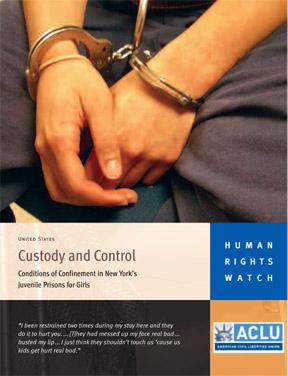
    Conditions of Confinement in New York’s Juvenile Prisons for Girls

    This 136-page report provides an in-depth look at the abuses and neglect suffered by girls confined in two remote New York State juvenile facilities known as Tryon and Lansing. The facilities are operated by the New York Office of Children and Family Services (OCFS) and are the only two higher-security facilities in New York State holding girls.

  • October 2, 2005

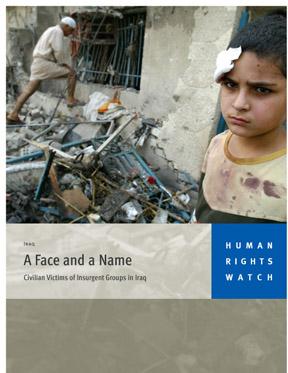
    Civilian Victims of Insurgent Groups in Iraq

    This report is the most detailed study to date of abuses by insurgent groups. It systematically presents and debunks the arguments that some insurgent groups and their supporters use to justify unlawful attacks on civilians.
  • July 6, 2004

    This 33-page report documents how the Tunisian authorities continue to hold as many as 40 of the country’s more than 500 political prisoners in long-term isolation in prisons around the country. This policy violates Tunisian law as well as international penal standards, undermining government claims of prison reform.
  • October 21, 2003

    U.S. Prisons and Offenders with Mental Illness

    Mentally ill offenders face mistreatment and neglect in many U.S. prisons. One in six U.S. prisoners is mentally ill. Many of them suffer from serious illnesses such as schizophrenia, bipolar disorder, and major depression. There are three times as many men and women with mental illness in U.S. prisons as in mental health hospitals.

  • December 1, 1990

    Shortly after Nicolar Ceauscu was overthrown on December 22, 1989, the world was exposed for the first time to the shocking images of Romania's orphans, expecially its handicapped children and babies with AIDS.